
How people play
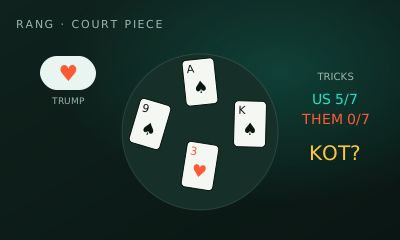
Four players in two teams, partners opposite. The player on the dealer’s right calls trump after seeing five cards, then everyone gets thirteen. Won tricks stay in the middle: the winner of trick three collects the first three, then every second trick collects two. First team to collect seven wins the hand; seven with the other side on none is a Kot.
Common challenges
- A weak call Picking trump on high cards alone instead of length leaves you out-trumped later in the hand.
- Overtaking your partner Throwing a winner on a trick your partner already has wastes strength you need later.
- Holding aces too long Side-suit aces lose their power once opponents are void and can trump them.
What strong play proves
Regular Kots and few lost calls show card counting, partnership reading and a feel for when to spend trumps.
What it improves
- Working memory You hold positions, sequences, or card locations under pressure.
- Forward planning You rehearse “if I do this, they do that” before you commit.
- Opponent reading You track habits, bluffs, and tells across rounds.
- Patience Waiting for the right moment beats forcing a bad one.
Best for
Four friends or family members, a pair practising together against two computer players, and anyone who grew up watching elders play Court Piece.