
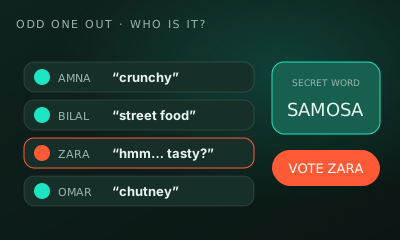
How people play
Groups open a room, share the code in their chat and play five quick rounds on their own phones. Each round takes about two minutes: one clue each, a 30-second argument in the chat, then a vote. A new player is the Odd One Out every round.
Common challenges
- Clues that are too exact Saying “Lahore fort” for Badshahi Mosque catches nobody, because it also tells the Odd One Out the word.
- Clues that are too vague “Nice” or “popular” fits anything, which makes you look like the one who doesn’t know.
- Bluffing too hard As the Odd One Out, asking lots of questions in the chat draws attention. Agree with the room and keep it short.
What strong play proves
Consistent wins show you can pick words carefully, read the people around you and stay calm when the table turns on you.
What it improves
- Verbal fluency Words, letters, and prompts reward quick language access.
- Opponent reading You track habits, bluffs, and tells across rounds.
- Composure Mistakes happen — recovering cleanly is the real skill.
- Social play Shared rules create fair trash-talk, coaching, and laughs.
Best for
Groups of 4–10 friends on a call or in the same room, classrooms and anyone who enjoys a game like Among Us with words instead of tasks.