
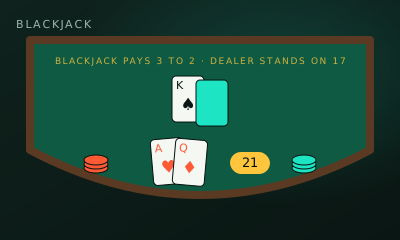
How people play
Up to five seats share one 6-deck shoe for eight rounds. Friends compare stacks at the end, and solo players sit with computer players that follow basic strategy, which makes them a good reference.
Common challenges
- Standing on 12–16 against a 7+ It feels safe, but the dealer will usually make 17 or better, so you should keep hitting.
- Not doubling enough Doubling 10 or 11 against a weak dealer card is where most of a skilled player’s profit comes from.
- Splitting tens A 20 is a winning hand. Splitting it into two average hands usually loses value.
What strong play proves
Ending ahead over many rounds shows you calculate under pressure and stick to the right decision when your instinct disagrees.
What it improves
- Mental math Totals, odds, and distances get calculated on the fly.
- Risk judgment You learn when to press an edge and when to bank a safe line.
- Composure Mistakes happen — recovering cleanly is the real skill.
- Patience Waiting for the right moment beats forcing a bad one.
Best for
Short sessions, players learning the odds, and groups who want a casino-style game with no real money.