
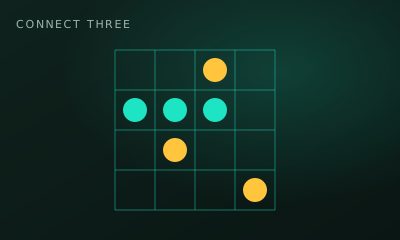
How people play
Casual players drop marks wherever feels open. Stronger Connect Three tables hunt dual threats — setups where blocking one 3-threat leaves another free. Online rooms keep it turn-based so calculation stays fair; Local vs is perfect for teaching forks to a friend on the couch.
Common challenges
- Tunneling on your own line Chasing a single path to 3 while ignoring their faster threat elsewhere on the 6×6 grid.
- Soft blocks Placing “somewhere nearby” instead of the exact cell that stops the win.
- Overcrowding the center Fighting only the middle until the edges decide the game.
What strong play proves
Winning Connect Three proves you can track multiple unfinished lines at once and force the opponent into no-good answers. It is less about memorized openings and more about relentless threat hygiene.
What it improves
- Forward planning You rehearse “if I do this, they do that” before you commit.
- Pattern recognition Wins come from spotting shapes, threats, and repeats early.
- Spatial reasoning Board geometry and paths matter more than raw luck.
- Sustained focus Short matches still punish zoning out for a single beat.
Best for
Strategy-curious players who like visible goals — 3 in a row — without realtime pressure.