
How people play
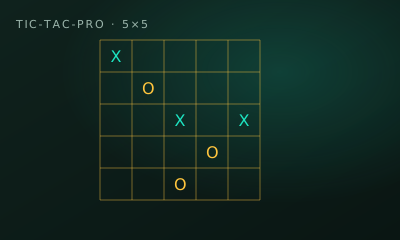
Casual players drop marks wherever feels open. Stronger Tic-Tac-Pro tables hunt dual threats — setups where blocking one 4-threat leaves another free. Online rooms keep it turn-based so calculation stays fair; Local vs is perfect for teaching forks to a friend on the couch.
Common challenges
- Tunneling on your own line Chasing a single path to 4 while ignoring their faster threat elsewhere on the 5×5 grid.
- Soft blocks Placing “somewhere nearby” instead of the exact cell that stops the win.
- Overcrowding the center Copying the opponent’s shape instead of breaking symmetry.
What strong play proves
Winning Tic-Tac-Pro proves you can track multiple unfinished lines at once and force the opponent into no-good answers. It is less about memorized openings and more about relentless threat hygiene.
What it improves
- Forward planning You rehearse “if I do this, they do that” before you commit.
- Pattern recognition Wins come from spotting shapes, threats, and repeats early.
- Spatial reasoning Board geometry and paths matter more than raw luck.
- Sustained focus Short matches still punish zoning out for a single beat.
Best for
Anyone leveling up from smaller connection games who wants a 4-in-a-row puzzle with room to breathe.